Managing money abroad is one of those things that sounds simple. You use your card. You go to an ATM. You pay for things the way you always have.
In practice, it doesn’t always work the same way from one country to the next. Sometimes it’s straightforward. Sometimes the details aren’t as clear as they seem. And sometimes the system you expect to rely on doesn’t work at all.
Over time, I’ve learned how different it can be depending on where I am—and how small things, like how an exchange rate is handled or whether a card is accepted, can make a bigger difference than I expected.
Cards vs Cash
When I first arrived in Paraguay, I used mostly cash. That’s what I was used to from other countries. In places like Thailand and Vietnam, cash was part of daily life, and withdrawing money regularly became a way to keep track of my spending without thinking too much about it.
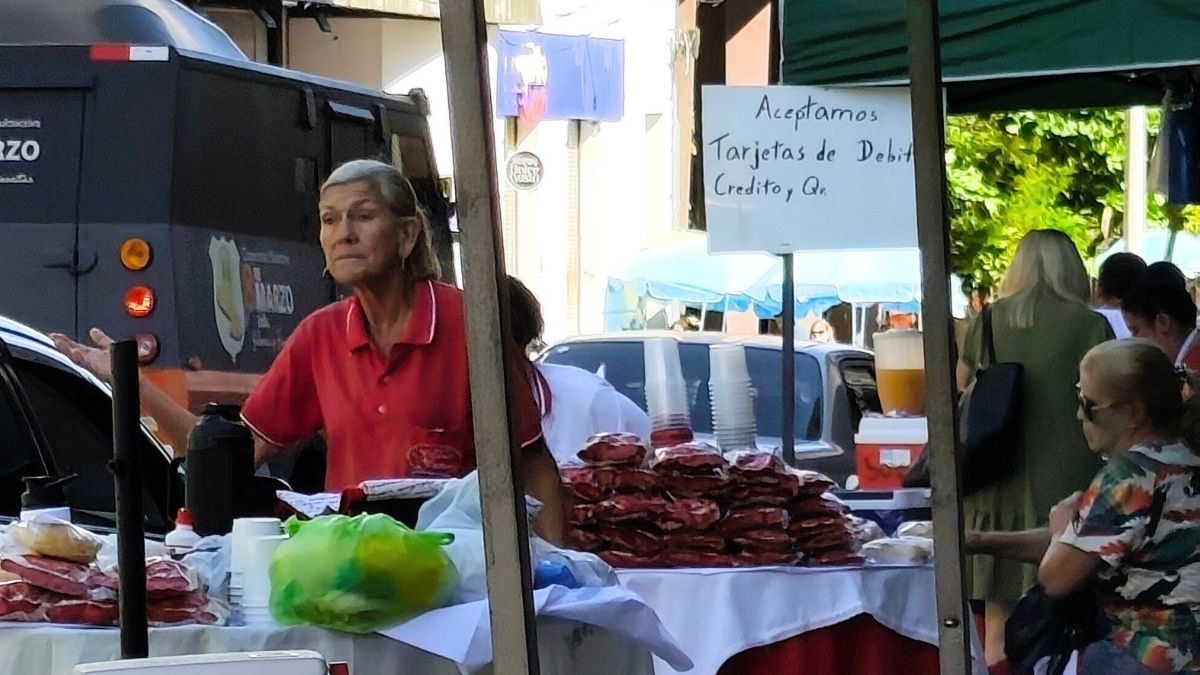
What surprised me was how often I could have used a card instead. In Paraguay, I’ve been able to use a debit or credit card in far more places than I expected—grocery stores, restaurants, and even some smaller businesses. I’ve seen street vendors in El Centro with signs saying they accept cards. The only place where I consistently need cash is in local markets.
Once I opened a Paraguayan bank account, that shift became more noticeable. Instead of relying on cash, I started transferring money into my local account and using my card for most purchases. It made certain things easier. Paying rent or sending money to someone else felt simple—more like using Venmo than dealing with cash.
This was one of many practical adjustments that I made over time.
There were also small incentives I hadn’t expected. Some businesses offer discounts for paying with a local card, especially supermarkets and restaurants. There may be other perks as well, but since everything in the app is in Spanish, I don’t always know what’s available or how to use it.
Now, I use my card far more than I use cash in Paraguay. That’s very different from how I handled money in other countries, where cash was the default and cards were less reliable.
At the same time, I’ve started to notice that this isn’t static. When I was in Ecuador, I used almost entirely cash—either withdrawn from an ATM or brought from the U.S., since they use the dollar. But my sister, who lives there now, uses her card for groceries, gas, and restaurants in Quito. Even in smaller places like Cotacachi, more businesses are starting to accept cards, even if cash is still common in lower-cost spots. It’s one of the things that’s harder to predict ahead of time when you’re deciding where to go.
It feels like things are shifting. What I experienced in one country—even a few years ago—doesn’t always match what’s happening there now.
ATMs (What Looks Simple Isn’t Always)
Using an ATM abroad has usually been straightforward for me. In most countries, when I use my U.S. bank card, I’m given the option to switch to English. When that option is there, everything feels familiar, and I can move through the prompts quickly without much thought.
It’s different when that option isn’t there. When I use my Paraguayan bank, everything is in Spanish, and I slow down. I read each option carefully, making sure I understand what it’s asking before I press anything. It’s not complicated, but it does require more attention.
Where it becomes harder for me is when the wording isn’t clear. Sometimes it’s a language issue. Sometimes it’s the way the options are phrased. I’m not always sure which.
I ran into that in Albania. Even with the ATM set to English, I was given two options for how the exchange rate would be handled. One would use my bank’s rate, and the other would use the local bank’s. The wording wasn’t clear, and I chose wrong. When the cash came out, I realized I had received far less than I should have—about 75% of what I would have gotten if my bank had handled the exchange.
What struck me was how unclear the wording could be. I had seen this choice before in another country, and it had been easy to understand. I knew exactly which option to choose, and my U.S. bank always gave the better rate. In Albania, it wasn’t clear at all.
In Paraguay, the experience has been more predictable. If I’m using my U.S. card, I get the option for English, and the process is simple. If I’m using my Paraguayan account, I know everything will be in Spanish, and I just take my time with it. Over time, I’ve gotten used to both, but I still find myself paying attention to what the machine is asking, especially when it comes to anything involving exchange rates or fees.
The Hidden Costs
The difference in Albania wasn’t just noticeable. It was significant.
That one choice at the ATM—something I didn’t fully understand at the time—meant I received about 75% of what I should have. It wasn’t a small fee. It was a large difference, built into the exchange rate itself.
When I first started traveling, I paid more attention to ATM fees. Those were easy to see—usually a few dollars per withdrawal—and something I could factor in. What I hadn’t fully considered was how much the exchange rate could vary depending on which option I selected.
In countries like Albania and Paraguay, those ATM fees can still add up. Both have relatively high fees and low withdrawal limits, so I often had to go back to the ATM more than I expected. Even when each fee wasn’t large, it accumulated over the course of a month.
Before going to those countries, I had opened a Charles Schwab Investor Checking account, which refunds all ATM fees worldwide. So I wasn’t paying those fees in the end, but I could still see them.
The exchange rate was different. That’s one of the hidden costs—it’s built into the rate a local bank uses when it handles the conversion, and as I saw in Albania, the difference can be significant depending on which option is selected.
Another cost shows up in a different way. When withdrawal limits are low, I have to go back to the ATM more often. Even if the fees are refunded, it still means more transactions, more chances to make a mistake, and more exposure to whatever exchange rate is applied each time.
It’s not always the fee itself that matters most. It’s how the transaction is handled.
When It Doesn’t Work at All
The biggest shock I got wasn’t about fees or exchange rates. It was realizing that in some places, the system I was used to didn’t work at all.
I found that out during a layover in China. It wasn’t a trip I had planned. I was only there for about 24 hours, passing through on the way somewhere else. I had had a layover like that before and stayed in the airport because I was too tired to do anything more. This time felt different. I had energy, and when I met a group of women on the plane who had booked a guide to see the Great Wall, I was excited about the chance to go with them.
I said yes.
The plan was simple. I would get cash when we landed, and I could pay my share once we got there. That’s how it had always worked for me.
But I didn’t have any cash with me to exchange. Once I arrived, I couldn’t get any.
The ATMs I found didn’t work with foreign cards, and the hotel machine didn’t work either. At the time, I assumed it was out of order. Looking back, it was likely the same issue. When we went out, I realized something else—credit cards weren’t accepted either. Not foreign ones. Everything required local payment methods.
I thought I could work around it. I offered to cover dinner with my credit card and repay them that way. But the restaurant didn’t accept it.
Cash only.
So they went to the Great Wall. And I went back to the airport.
If I had been planning a trip to China, I probably would have looked into how money worked there ahead of time. But I wasn’t. I was relying on the same assumptions that had worked for me everywhere else.
That was the first time I had been somewhere where I couldn’t use a foreign card to get cash or make a payment.
What Changed Over Time
I didn’t come away from all of this with a system. I still handle money differently depending on where I am.
One thing that did change was opening a Schwab account before going to Albania and Paraguay. Since they refund all ATM fees, I stopped paying much attention to the fees themselves and choose ATMs based more on location and withdrawal limits than on cost.
What I do pay more attention to now is how the exchange rate is being handled. Before finalizing a transaction, I check to make sure the exchange rate is determined by my bank, not the local bank. That’s a simple check, but it makes a difference.
I also pay attention to the exchange rate itself between withdrawals. The dollar has been on a downward trajectory, so if it goes up even temporarily, I’ll sometimes make a withdrawal while the rate is more favorable. I use XE.com to keep an eye on it.
Other than that, not much has changed. I still don’t usually carry much backup cash. It’s not something I think about in the U.S., where I use a card for almost everything, and that habit tends to carry over.
What’s changed most is just awareness.
Using a Local Bank
Opening a bank account in Paraguay changed how I handle money day to day. Before that, I relied mostly on cash, withdrawing from my U.S. account and using it for everything.
Now, I usually withdraw money from my U.S. account and deposit it into my Paraguayan account, then use my local card for most purchases. It makes certain things easier. Paying rent or sending money to someone else is simple, and once the money is in my account, transferring it feels similar to using Venmo.
There are also small benefits tied to using a local card. Some businesses offer discounts for card payments, especially supermarkets and restaurants. There may be other perks as well, but since everything in the app is in Spanish, I don’t always know what’s available or how to use it.
That’s the tradeoff. The system is convenient, but it takes more effort to navigate because of the language.
Even with that, I still use my local account most of the time.
Thinking About Moving Abroad?
As I learned over time, it’s often the small, practical details that matter most—how you access your money, how payments work, and what changes from one country to the next.
The 90-Day Move Abroad Planner brings those details together into a simple, step-by-step plan so you’re not figuring them out one situation at a time.
If you’re starting to think through your move, it can help you organize the process and move forward with more clarity.
View the PlannerConclusion
I still use ATMs. I still use my cards. Most of the time, it works the way I expect it to.
But I don’t assume that anymore.
Every country has its own system. Sometimes it’s easier than I thought it would be. Sometimes it’s more complicated. And sometimes it doesn’t work at all.
Most of it isn’t something I could have planned perfectly in advance.
It’s something I’ve learned by being there.